Guest post: Making the Museum Publishing Band

A couple of weeks ago, I was captivated by Liz Neely’s Tweets from the National Museum Publishing Seminar in the USA. The conference sounded really interesting, and so I asked her to do a quick write-up for museumgeek. The resulting post is much more than that. Calling in two co-authors, this post explores museum publishing through a pretty rock’n’roll perspective. Enjoy. 


Making the Museum Publishing Band

Liz Neely
, Katie Reilly and Sarah Guernsey

Quite randomly, the National Museum Publishing Seminar, held June 21-23, holds the distinction of being a band reunion of sorts for us. Back about 8 years ago, the three of us shared stages and practice spaces.

We all worked at the Art Institute of Chicago—Liz in technology and Katie and Sarah in Publications—but we rarely actually worked together. In that large museum and at that time, our worlds infrequently overlapped. But as a band, we were particularly collaborative—we all wrote songs, we all sang, and there isn’t a tune that doesn’t have harmonies or some kind of backing vocal. One of us would bring a song to the group and we would all start tinkering with the idea, adding parts, experimenting, iterating, reviewing and building the song. We had to be comfortable accepting and responding to critique. We made songs; we booked shows; we made T-shirts and burned CDs—we never practiced enough, but we created something together that we loved. In the best of cases, the song transcended the sum of our individual parts. These songs, this accumulation of voices, formed the identity of the band.

Katie, Sarah and Liz, circa 2004.

Seeing each other again at the MPS got each of us thinking about the band again, not just nostalgically, but because in some odd sense it captured the spirit of this year’s conference. The theme was “The Voice of the Museum,” and both the roster of attendees and the agenda reflected that the profession of museum publishing is changing profoundly. No longer a forum only for professionals in publishing departments and their distributors, the conference encompassed digital and social media interlopers (bringing Katie, Sarah, and Liz together at a conference for the first time). Centered around a wider dialogue about publishing as a key and central feature to a museum’s identity formation, the gathering recognized the increasingly interdisciplinary nature of our work.

Some museums have already implemented this wider definition of publishing by centralizing efforts among various publishing silos, such as the Walker, or by centralizing budgets with cross-departmental committees, such as MoMA. Paul Schmelzer, Web Editor at the Walker, stated, “the Walker is one voice comprised of many.” In thinking about ‘voice’ as a concept, it’s important to recognize that each individual ‘voice’ is not a static set variable. This is what keeps our institutions evolving and alive—but also why strong vision and leadership remains paramount in keeping efforts moving in the same direction. Both Schmelzer and, in a later panel, Kristi McGuire from the U of C Press emphasized a move from using digital communications strictly for promotion to creating a content model that emphasizes and supports the institution’s personality. McGuire reported that since transitioning from a publicity-focused blog to something more editorial, the traffic has tripled.

How do we harness each person’s contribution to create amazing publications across all platforms? As the definition of publishing gets wider and the channels more complicated, we must harness the contributions of a larger set of talents and expertise in a truly collaborative manner. Robert Weisberg called for a “content launch instead of a book launch” to set up communication early in the planning process among publishing, digital media, marketing, and distribution stakeholders. Stakeholders need to build from the strengths of other collaborators. Publishers should iterate and be experimental like a technologist while developing an appetite for risk. Dan Sinker, the keynote speaker at the conference, who has has built a career at the intersection of a DIY punk aesthetic and technological savvy, particularly spoke to this need. He noted that so many developers and tech people he meets nowadays he discovers he knew back in the ’90s punk scene—making music, publishing zines, setting up record labels. They were people who made things that were ephemeral and constantly evolving yet important and rich. Technologists could learn from the organized workflow planning  and strategizing that publishers have honed. Kara Kirk pointed out that publications departments should be comfortable slowing things down appropriately. “Everyone wants to have their foot on the gas, but it’s not fun to not have brakes.”

The emerging role of the ‘publishing technologist’ is analogous to that of the editor.  Kate Steinmann defined the editor role with the following keywords “Ally, Advisor, Mentor, Magician, Meddler, Diplomat.” These are the qualities that a technologist also needs to take on in collaboratively helping the author best reach his or her vision. Editors, for their part, need to embrace an iterative approach to publishing, to balance their deeply rooted desire for perfection—for authoritativeness—with the realities and opportunities of new media.

We’d like to suggest that we approach museum publishing strategy as a collaborative creative process. Should we start a publishing band at the museum? How big is the band and what instruments do we need? Depending on the project, do stakeholders play collaborative vs. supporting roles? Are there project leads? Do we have enough roadies, sound guys, and photographers to pull it off? Do we want to attain the rough-hewn simplicity of the Ramones or insist on the polish of Steely Dan? Instead of viewing new challenges and uncertain roles with anxiety, can we see it as writing a new song?

Channeling Richard Holland from Bad at Sports: “Don’t be boring!” We should not continue doing things because that’s what’s always been done. There is an urgency and an opportunity to transform our processes in a way that creatively and effectively supports dialogue with our audiences across print and digital platforms. If we don’t grab a hold of it, we—both technologists and traditional publishers alike—will all be marginalized.

Visit the Museum Digital Publishing Bliki (a blog + wiki) to discuss museum publishing. http://digitalpublishingbliki.com


museumgeek: What do you think? Can museum publishing strategies be a collaborative creative process, as Liz, Katie and Sarah suggest? How would this idea work in your museum? 
Musetrain.

There’s a new museum site to pay attention to. Musetrain. This is a seemingly-anonymous group of museum professionals who have “been working in and around all kinds of museums (art, science & technology centers, history, cultural sites, zoos and aquaria, and others) long enough to have seen, experienced, and led a couple of cycles of change,” and they have just released a welcome, full of suggestions about the museum world. Go and read it now. Print a copy off, and revisit it regularly. See where the ideas in it sit with you over time. It is sensible, interesting, and useful. In one document, the authors have summed up so many of the ideas that lots of us have been playing with and thinking about. They manage to be both provocative and measured, and I hope that the coming posts and explorations of these issues will continue down the same vein.

A museumgeek-in-residence?

The cultural sector has a lot of residencies. There are writers-in-residence, artists-in-residence, and even Wikipedians-in-residence. I want to be a museologist-in-residence.

In November, I’m heading to the USA for MCN2012. It will be my fourth trip to the States in about twenty months, and I want to make the most of the opportunity of being there. What I am hoping is to find an institution willing to put me up for the week following the conference as an in-house museumgeek.

During the residency, I would ideally meet with staff from across the institution, explore the buildings and learn about the museum programming. I’d hope to get a fairly intensive introduction to a different museum, and learn more about the particular complexities it faces, sharing the insights I gain here. My reflections on the institution will feature on museumgeek for a full week (and no doubt continue to shape my thoughts after as well).

I’m hoping that this idea sounds like a good bargain for someone, somewhere. You’ll get an in-house blogger and museumgeek; I’ll get new insight and inspiration (and experience life in a different city).

I don’t have any preconceived notions about the sort of institution that I’d like to end up in or its location, so if you would be interested in playing host to your very own museumgeek-in-residence, get in touch here or find me on Twitter. I’d love to hear from you.

Let them eat cake. Revolutions + museum innovation.

During the last couple of weeks, it seems that everything I read is converging on a single topic: revolution. Whether reading about the structure of scientific revolutions (Thomas Kuhn), a social history of knowledge (Peter Burke), technological revolutions and techno-economic paradigms (Carlota Perez) or Rob Stein’s recent piece on technology as a catalyst for change in museums, discussions about the metamorphosis from one paradigm to another keep surfacing.

Kuhn’s book is the oldest of these texts, and within its pages he explores the way revolutions in normal science occur. Such normal science is the science that occurs when a scientific community has defined the legitimate problems and methods of a research field, colouring the way they see and understand the problems (and necessary solutions) of that field. The field has a foundation. However:

Sometimes a normal problem, one that ought to be solvable by known rules and procedures, resists the reiterated onslaught of the ablest members of the group within whose competence it falls… And when it does – when, that is, the profession can no longer evade anomalies that subvert the existing tradition of scientific practice – then begin the extraordinary investigations that lead the profession at least to a new set of commitments, a new basis for the practice of science. (p5, 6)

Such scientific revolutions are “the tradition-shattering complements to the tradition-bound activity of normal science.” (p6) They are what happens when a new theory disrupts prior theory and requires a complete reevaluation of accepted knowledge.

We are seeing this same type of change mimicked across the board right now, from news and media, government, retail, academia and publishing, just to name a few. The Internet motivates tradition-shattering examination of the what, how and why of so much previously accepted normal business. It cannot be simple solved by known rules and procedures. Simply adapting offline business to the online world does not work, as we’ve seen recently with the changes to news organisations. Instead each professional community is being forced to re-evaluate its traditional problems, rethink familiar entities and displace the old network of theory. (Kuhn, 7)

Such a paradigm shift is challenging, to say the least, because it involves letting go of the old without necessarily having a clear confidence in the success of the new. We are starting to have a sense of some of the things that don’t work, without necessarily knowing what does. No wonder there is such resistance from those within these sectors, from the old guard – those who have a vested interest in the success of the old system, which they have played a part in creating and enforcing hitherto. No wonder we are seeing such increasing emphasis on innovation, and the freedom to fail.

Perez discusses the shape and interconnectedness of innovation, and its impact on markets.

New technology systems not only modify the business space, but also the institutional context and even the culture in which they occur (as disposable plastics did in the past and the internet does now). New rules and regulations are likely to be required, as well as specialised training, norms and other institutional facilitators (sometimes replacing the established ones). These in turn tend to have very strong feedback effects upon the technologies, shaping and guiding the direction they take within the range of the possible.

Maturity is reached when the innovative possibilities of the system begin to wane and the corresponding markets to saturate. The key point here is that individual technologies are not introduced in isolation. They enter into a changing context that strongly influences their potential and is already shaped by previous innovations in the system.

Again, this is something we are seeing right now. Initially, museums could deal with new technologies almost as an adjunct to the ‘real’ work of the museum. It was an add-on, something akin to marketing in a different space. But we are moving beyond that now, because the institutional context and culture of the museum are also starting to change. We are starting to rethink the basic assumptions upon which museum practice has been built (what does it mean to be authoritative in a world that values transparency over opaqueness?)

But we should not forget that this is a cyclical undertaking. In looking at the social history of knowledge, Burke writes:

It is a history of the interaction between outsiders and establishments, between amateurs and professionals, intellectual entrepreneurs and intellectual rentiers. There is also interplay between innovation and routine, fluidity and fixity, ‘thawing and freezing trends’, official and unofficial knowledge. On one side we see open circles or networks, on the other institutions with fixed memberships and officially defined spheres of competence, constructing and maintaining barriers which separate them from their rivals and also from laymen and laywomen. The reader is probably tempted to side with the innovators against the supporters of tradition, but it is likely that in the long history of knowledge the two groups have played equally important roles. (p51, 52)

Right now, we in the musetech sector are the innovators, with open networks and unofficial knowledge. We are crafting the new paradigm for museums, and that bears great responsibility because we don’t yet know what works. It is all untested. But as we invest in these ideas, as we stake our intellectual capital on them, we will become more invested in their success. It will be harder for us too to let go of ideas that might not be appropriate the paradigm after our own. As Burke further iterates, “The creative, marginal and informal groups of one period regularly turn into the formal, mainstream and conservative organizations of the next generation or the next-but-one.” (p49)

In Rob Stein’s recent piece on technology as a catalyst for change in museums, he examined the shifting discourse within musetech circles, and the impact it’s having on professional practice and expectations.

In chemistry, certain reactions require the addition of a catalyst before any such magical transformation can begin. These catalysts can change a static combination of elements into a bubbling reaction that changes what was there before into something new. By extending this metaphor to museums, we can see that rapid changes in our technology-mediated culture have catalyzed dramatic shifts in museums during the past decade.

Recently, an interesting phenomenon has been taking place in museum technology circles. Conversations online and at conferences that were previously dominated by the pragmatic technical issues facing museums have been replaced by a series of discussions regarding many of the foundational challenges faced by museums today. Nuanced critical examinations about the identity of museums, their roles in society, responsibilities to serve a global public, issues of preservation, education, scholarship, primary research, and ethics have matured to the point that those same discussions are beginning to influence the strategic underpinnings of museums across the world.

What’s going on here?

We are the outsiders, the rebels, the innovators, and we have noticed cracks in the foundation. We are pushing for experimentation and trying out many new ideas in order that we can lay the new foundations upon which to construct our idea for the museum of the next generation. It is an exciting time to be working in this sector. But we should not forget that the more we invest in the ideas and assumptions that underpin our movements in this direction, the more we will become the old guard ourselves, finding it difficult when our own ideas are challenged and underwritten by the rebels and outsiders of the next generation.

It might seem premature to be thinking this way. Our ideas have not yet even taken hold. But awareness of such cycles and revolutions might lead those of us at the vanguard of change to have some greater understanding of those who work to hold museums back from change, those who have themselves invested significant amounts of their own energy and intellectual capital to craft a museum that reflected the needs and values of a previous paradigm. After all, it is usually the agitators who prevail in the end.

#drinkingaboutmuseums – Sydney – 3 July

Hey meeps (museumpeeps).The #drinkingaboutmuseums movement is spreading! It was held in New York last week, and there is now talk of a London event too. Exciting!

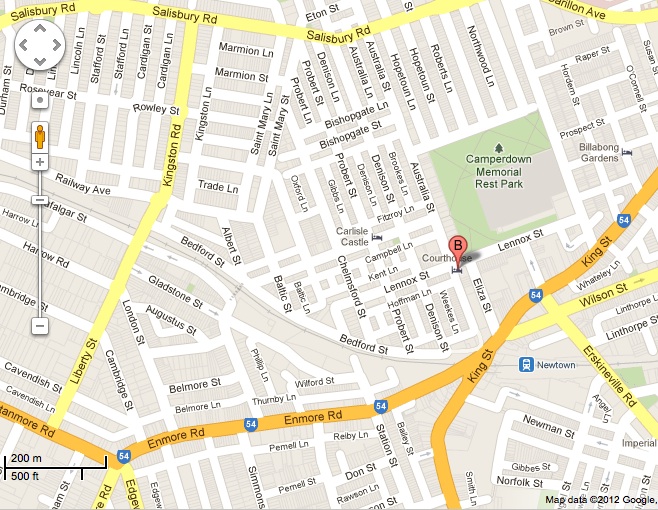
But the next date and place for #drinkingaboutmuseums Sydney has been decided, so come along and drink about museums, technology and the future. We will be getting together on Tuesday 3 July 2012 at the Courthouse Hotel, Newtown. I’m going to aim to be there from about 5.30pm, so rock up anytime in the hour or two following and come and talk museums.

If you’ve got any questions, leave a comment or find me on Twitter or follow the #drinkingaboutmuseums tag. When you rock up, if you don’t know anyone, there is a good chance I am going to be wearing a bright yellow jacket with similarly bright red hair, so I should be fairly easy to spot. Looking forward to it!

Provocation: Society doesn’t need museums.

This morning, Australia was greeted with the news that major media organisation Fairfax will shed 1900 staff, shift its two major newspapers from broadsheet to tabloid format, and erect paywalls around the websites of those major metropolitan dailies – all in response to decreasing ad revenue. It is expected that News Ltd. will follow suit, and make cuts in coming days.

Meanwhile, two US cities with metropolitan populations of more than a million (New Orleans and Birmingham) are about to become the first without daily newspapers. Such news heralds the latest movement in the ever-shifting media landscape as traditional broadcast organisations try to adjust to the changing information/media infrastructure.

These changes were the subject of the recent USA FCC report on the Information Needs of Communities: The Changing Media Landscape in a Broadband Age. It is a long (468 pages), but interesting, read about the changing media landscape in the US, and although the media sector is in many ways different from the museum sector, there are also plenty of similarities, as some museum bloggers have recently noted. As the report captures:

It is a confusing time. Breathtaking media abundance lives side-by-side with serious shortages in reporting. Communities benefit tremendously from many innovations brought by the Internet and simultaneously suffer from the dislocations caused by the seismic changes in media markets. (7)

In a just-published assessment of the Fairfax changes, journalist Jonathan Green argues that the Internet is not to blame for the media organisation’s failure, but instead that poor revenue models were what dragged it down “Because the business is not content, not journalism; the business is selling advertising.”

Clay Shirky’s 2009 post on Newspapers and Thinking the Unthinkable  speaks to this. (HT to Nancy Proctor):

Society doesn’t need newspapers. What we need is journalism. For a century, the imperatives to strengthen journalism and to strengthen newspapers have been so tightly wound as to be indistinguishable. That’s been a fine accident to have, but when that accident stops, as it is stopping before our eyes, we’re going to need lots of other ways to strengthen journalism instead.

What Shirky has written here could as easily have museums as its focus. Society doesn’t need museums. What it needs is mechanisms for selecting, preserving and communicating objects and information about our past and present in order that we can better prepare for the future. To date, museums have been an important vehicle for answering that need. But it is not the institution itself that is significant – it is the purpose it seeks to fill.

Even within the sector, we can see that this is true. When Ed Rodley started his making a museum from scratch series, the first post attracted all sorts of questions about why it was that his collection needed to be a museum. As Koven put it:

just because you have a collection, you don’t necessarily have to display it. Just because you have a building, that building doesn’t necessarily have to be used to display those collections, or as a place for people to visit.

So surely the question we should be asking, as individuals, institutions and as a sector, is how do we achieve the purposes of selection, preservation and dissemination? Is it by collecting physical objects (as has historically been the case) and storing them, selectively displaying those that have particular illustrative or narrative qualities, as it has been? Or is it by investigating new models for publication, like the Walker has done, and integrating those models more closely with the physical building of the museum? Or will the approach need a completely new way of thinking through the problem?

A statement by museum scholar David Carr is of interest here. When reading, substitute the word Internet every time you see the word museum:

A museum is not about what it contains; it is about what it makes possible. It makes the user’s future conversations, thoughts, and actions possible. It makes engagements with artifacts and documents that lie beyond the museum possible. It constructs narratives that help us to locate our memories, passions, and commitments. The museum illustrates irresistible new thoughts and stimulates revisions of former thoughts. The museum invites us to reconsider how we behave and what we craft in the worlds of lived experience. The gift of a museum for every user is an appreciation of complexity, a welcoming to the open door of the unknown, the possible, the possible-to-know, and the impossible-to-know.
David Carr, “Mind as Verb,” in Museum Philosophy for the Twenty-First Century. 16. Author’s emphasis.

The environment and nature of the Internet means that it is innately set up to achieve many of the very things that Carr posits the museum seeks to accomplish. In fact, I would argue it is far better suited for making the user’s future conversations, thoughts and actions possible. The very existence of the Internet, then, raises questions about the role of the museum.

Jim Richardson at MuseumNext just argued that:

Museum leaders need to rethink digital, and look at it from a more strategic perspective, one which can really deliver on the mission of the institution and the needs of the public. Museum leaders need to recognise that a powerful website can deliver just as much as a powerful exhibition and fund the roles within the institution to produce something credible online.

Although I agree with his perspective, I don’t think it goes far enough. Digital does not just change modes of delivery. It changes the nature of the very problem that museums purport to solve. That the model we have had to date has largely worked may be more a happy accident than indicative of its superior design.

Of the Fairfax changes, Jonathan Green says:

There was a moment, maybe 10 years ago now, when a bold management at Fairfax might have picked the company up by the scruff of the neck, rationalised the staff, integrated the online and print operations, trimmed the paper size, and moved the content toward a premium mix of context and analysis.

They would have looked adventurous, bold, purposeful; they would have left the competition in their dust. But that was 10 years ago.

Now is that time for museums. We still need the things that museums do. We still need to know how to select, preserve and disseminate, whether objects or information. What we don’t need is museums. If those same needs can be met by other means (digital or otherwise), the impact on museums will be significant. I think it’s important to keep this in mind as we look to the future, particularly as we see the effects of the Internet on other traditional institutions.

What do you think? Does society need museums, or just the things that museums seek to do? And if the latter, what should that mean for museums as they approach the coming decade?

Let’s play! How to block innovation in your museum?

One of the best sessions I attended at GovCamp this week was a reverse brainstorming session run by Nerida Hart on “How to block innovation”. We had to come up with the things that effectively prevent innovation in an organisation. It was great. I thought it might be a cool thought experiment to involve you in too. (It also seemed appropriate to the theme of avoiding innovation to simply take an idea from elsewhere and adapt it to my own purpose.)

So let’s play! How would you prevent your museum from being innovative? To kick off, if I wanted to block innovation I would:
– prevent social media or talking to anyone outside the institution (definitely no conferences).
– punish failure.
– not value innovation.

Since this is a game, I’m even going to offer a prize (Australian treats!) for the person who comes up with the least innovative answer (mmm… incentivising mediocrity).*

Join in! What are the best ways to prevent/block innovation and fresh thinking in (your) museums?


*NB: It’s worth noting that the winner will be chosen completely at a whim. Nothing motivates like randomness and unpredictability in reward systems.

Every organisation has a collection now

On Tuesday, I attended GovCamp to learn more about public sector innovation beyond the GLAM sector. As expected, the recurrent themes of balancing risk and innovation, benchmarking and measuring success and impact, and new ways of doing business that include digital as core were central. Although enjoyable, most of this discussion touched on ideas that I was already familiar with.

What I found interesting, however, was just how many of the concerns and questions that I (naively) considered to be largely the purview of GLAMs are being replicated beyond our sector. One presentation on the Australian spatial innovation data structure discussed linked open geolocation data for use in urban planning, emergency management, policy decision making and much more. In it, Helen Owens from the Office of Spatial Policy raised the question of stewardship of fundamental spatial/geolocation data, asking “who are the custodians of spatial data to ensure that it is authoritative?” Soon after, Julie Harris from the Australian Bureau of Statistics spoke about contextualising the ABS “collections”. Although I was aware that the ABS “collected” data and information, I hadn’t considered the implications that online, their data is a collection that needs contextualisation as much as that of a museum.

Monique Potts of ABC Innovation addressed the broadcasting organisation’s movements towards open collections, shared data and collaboration, with particular emphasis on educational content. Almost across the board, speakers address the recurring themes of context, connection, collaboration, and contributing to the global ecosystem of ideas. Many talked about the challenge of engagement and providing interactive and immersive environments online. Adam Carlon, from the Social Innovation Branch, Department of Education, Employment and Workplace Relations, spoke about the emphasis on engagement, better educational outcomes and place-based impact initiatives. Questions that to me once seemed particular to museums (if only offline) are certainly not so in the digital space.

Elizabeth Merritt recently wrote about the broken economic model of museums, proposing that:

the visible and profitable parts of being a museum can, and are, peeled off and replicated by for-profit institutions. Travelling exhibits? Check out venues like Discovery Times Square. “Museum quality” merchandise? Not a problem. Places to spend the day with the kids in an edutainment environment? Common and proliferating. And none of these institutions have to bear the costs of collecting and preserving, undertaking research, and making education available in an equitable way both to those who can pay the true costs and those who cannot.

But it’s isn’t only the visible and profitable parts of museums that are being replicated. Even collecting, preservation and public contextualisation of that which is collected is being repeated by a broad spectrum of organisations. Many public sector organisations far removed from the GLAM sector have collections and archives – of data or information – that they now want to preserve, contextualise and communicate effectively, specifically so that it can be repurposed and used to create new knowledge.

It seems to me that those organisations who have data at the centre of their collections are far better prepared for the making them useful and usable in the digital context than are museums, where minimal emphasis has been placed on making and maintaining good data. Beyond this, although authoritativeness was emphasised by the public sector orgs, trying to prevent or limit reuse was not. Multiple speakers mentioned the importance of making available remixing tools so that the data could be actively used. This is certainly an idea that is gaining momentum in our sector too, but I fear museums are pushing against a self-limiting legacy in our perspectives on these issues compared to many other organisations.

I keep returning to a recent post by Nick Poole, who wrote:

When we think of the challenges which confront museums, archives and libraries today, they are not simply challenges of marketing or presentation, funding or political profile. Nor are they challenges of how to ‘go digital’. They are challenges of relevance – our fluency with social media will define the confidence with which we step into the Connected Age. Our comfort with shared authority and interpretation will define the extent to which we empower or disenfranchise our users from creating and exploring their own connections. Our commitment to integrity and transparency will define the extent to which the coming generations will see us as part of the problem or part of the solution. Our deftness with open business models will define whether our future customers understand, and are willing to pay for, the value we can add.

The challenges of relevance are not merely limited to a fluency with, and understanding of, social media. Museums are not just trying to establish new conventions of display and publication online; they first have to break established ways of thinking about the use and value of their collections in an arena where good, remixable data is becoming increasingly emphasised. Koven recently reminded us that “As more and more institutions make their collections data available via APIs, we are effectively heading towards a place in which every museum will (theoretically) have access to every other museum’s data.” I’d argue that we need to remember that it’s not just museums who have collections, and not just museums who are making their collections data available. Everyone has collections now, so what we need to be thinking about is how our collections can and should fit into this context.

What do you think?

What happens when geeks design museums?

I’ve started to notice a couple of interesting patterns or trends in the digital museum dialogue over the last couple of weeks and months. Just taking a quick flick around the blogs and looking at some of my favourite museum thinkers, we have Koven speaking at MuseumNext about the Kinetic Museum, and asking What if a museum’s overall practice were built outwards from its technology efforts, rather than the other way around?. Ed’s making a museum from scratch series is moving towards imagining a radically transparent museum – one in which labels might include information about who wrote them, objects might have whole histories available, or information that leads visitors back outside the walls of the museum to continue their journey beyond the physical space. And Seb has proposed that “the exhibition as a form needs to adapt. Radically. And I don’t mean into a series of public programs or events.” His great post from last week, too, considered new ways of designing exhibitions as immersive events with digital parallels.

There are two things that I find fascinating about this. The first is that this dialogue is forming a kind of dispersed ‘Koinonia’, or  collaborative thinking. Although each of us is physically removed from one another (in my case, across oceans, and for the others, at least a few hours of travel between), we are all bouncing off, and building upon, the ideas, questions and inspirations being shared by the others.

But the second reason this is interesting to me is that in each case, they we are all starting to reimagine or redesign physical museum experiences with ideas drawn from digital experiences. The museum technology conversation seems to be shifting from merely how does technology impact the business of the museum practice to how should it impact the museum building or the design of museums physically. Of course, there is precedence for these conversations with Nina Simon’s approach to exhibition design, which draws upon Web2.0 philosophies. But these new discussions seem to further explore the concept of creating the physical space of the museum upon the principles and values of the Internet.

So what are these values, and how could they apply to museum/exhibition design?

For me, the immediate ones that come to mind include transparency and openness, agility and responsiveness, customisable and personal experiences, and sharable, social and participatory interactions. Many of these ideas are ones that I’ve spoken about previously on this blog, but I’ve always focussed on how they might/should apply to museum online efforts.

Ed’s concept of radical transparency in the museum is provocative. In Too Big To Know, David Weinberger proffers that one of the basic elements of the Net experience is that “[t]he Net is a vast public space within which the exclusion of visitors or content is the exception.” (174.) He also points out the abundance of the Internet, where “there is more available to us than we ever imagined back in the days of television and physical libraries.” Taking these ideas into the physical museum space could see the size and complexity of working collection made visible and public as default, whilst still being able to distil ideas through the use of selected objects chosen for formal exhibition/display. This approach also puts a contemporary spin on the idea of curation, where the curator draws attention to the things worth seeing within the abundant content available. As I commented, the recently opened MAS | Museum Aan de Stroom in Antwerp has a visible storage area that houses about 180,000 artefacts from the collection. Imagine being able to see the entirety of a collection, as well as its details. What kind of public value might such an approach have?
(Of course, such an approach would likely have implications for cost, security etc. – there are many as-yet-unresolved issues here.)

What else? I think one of the most enduringly appealing things about the Internet is that it is highly personal and customisable. My experience online is likely very different from yours. You and I, we will read different things, and be drawn to different sites. We will even visit the same sites, but on different browsers and devices, or at different times of day. So how could a museum make an experience that put emphasis on “immersive exploration rather than a linear narrative“, as Seb has been asking? What kind of approach to exhibition design is needed to give individuals ownership over their experiences and yet still maintain connective narrative tissues to make sense of the core concepts and ideas at play?

Digital experiences are sharable, and frequently participatory. But they are also agile, kinetic, and scalable from global to local, and back again. Our conversations and interactions online are not limited to our physical proximity, but they are often related to it. I chat to people all over the world on Twitter, but also make a point of meeting up with them in person when circumstances allow. There is an overlap between my digital and physical experiences, a parallelism (as Seb recently observed). So how could these parallel experiences be incorporated into museum setting? Could the museum tap into and contribute to global themes and conversations before and after the visit (online or offline), and then focus on the local and particular in the actual space? Would that be the right approach?

Matt Popke, in the comments on Seb’s mixtape post, joins in.

I just think the bar has been raised a bit in the “historical narrative” part of the equation. People live in a google age now. If you encounter something you are not familiar with you simply google it and find out whatever you want to know (or maybe you think you find it, that’s another issue entirely). People are accustomed now to having mountains of information available to them at a whim. Tiny tombstone labels on collection items or informational plaques near an exhibit just don’t satisfy like they used to.

The challenge is finding a way to incorporate *all* of the rich history and context of an item in the display of that item, or otherwise finding a way to deliver more in an exhibition than we’re used to, more context, more data, more story. We need to deliver this information in a way that feels explorative, like the audience is taking their own path through our collection and discovering their own version of the narrative. Hypertext, as a medium, is perfect for this kind of intellectual exploration when dealing with an individual. How do we create a hypertext-like experience in a physical space that multiple people can enjoy simultaneously?

There are lots of ideas here, and most of them are entirely unresolved. Still, this trend in the conversation seems to bend more and more to be broaching the divide between the physical and virtual and trying to rethink or disrupt current approaches to museum or exhibition design. Why this is happening now, I’m not sure. (And does it have implications for museum careers? Will your next exhibit designer be someone with an interest/background in tech?) But it is an interesting line of questioning to pursue.

What happens when museums begin to bring the values and ideas that are normally associated with the Internet into the physical design of the museum?

I’d love your thoughts.

Do rats chase chocolate in your museum? Thoughts on organisational habituation.

Ed Rodley’s thought experiment on making a museum from scratch has only just started, but the responses to his initial post are provocative. Almost all of them question Ed’s initial assumptions about the scope and definition of the problem. After setting some conditional ground rules for the museum (it has about 200,000 objects, you have an old building in which they can be housed, and a big enough budget to get started, but you’ll need to be judicious with hiring etc), Ed’s starting place was the collection. He asked “Who are the audiences for this material and what are their needs?”

Instead of answering this question, however, almost all of the commenters have problematised the starting place of the inquiry. Why does this need to be a museum? If it is a museum, does the building necessarily have to be used for display? What kind of baggage comes with the collection that necessarily has to be dealt with before the museum can move forward? What is the museum’s mission, and how early into the process of creating the museum does it need this to be defined? Already the exercise has really brought home to me both the complexity of starting a project like this, and just how many assumptions we carry with us about museums. It has almost certainly brought such questions home to Ed too, since his second post seeks to address many of these questions.

But while I was thinking about this, a friend linked to a fascinating if slightly old article from the New York Times that explores consumer behaviour and the ways that companies target consumers. Amongst other things, it addresses the way behaviours become habituated and ingrained:

An M.I.T. neuroscientist named Ann Graybiel told me that she and her colleagues began exploring habits more than a decade ago by putting their wired rats into a T-shaped maze with chocolate at one end. The maze was structured so that each animal was positioned behind a barrier that opened after a loud click. The first time a rat was placed in the maze, it would usually wander slowly up and down the center aisle after the barrier slid away, sniffing in corners and scratching at walls. It appeared to smell the chocolate but couldn’t figure out how to find it. There was no discernible pattern in the rat’s meanderings and no indication it was working hard to find the treat.

The probes in the rats’ heads, however, told a different story. While each animal wandered through the maze, its brain was working furiously. Every time a rat sniffed the air or scratched a wall, the neurosensors inside the animal’s head exploded with activity. As the scientists repeated the experiment, again and again, the rats eventually stopped sniffing corners and making wrong turns and began to zip through the maze with more and more speed. And within their brains, something unexpected occurred: as each rat learned how to complete the maze more quickly, its mental activity decreased. As the path became more and more automatic — as it became a habit — the rats started thinking less and less.

It seems to me that right now, all of us who are participating in Ed’s thought experiment are like the rats with overstimulated neurosensors, trying to make sense of the maze of questions and possibilities of a new museum. We know there is a reward at the end (chocolate!), but the path to that reward is anything but clear. We are scratching at the walls, and trying to work out where the edges of the maze are. We are most engaged with the puzzle and most able to find new solutions.

But if this was a real situation, it likely wouldn’t be long before our behaviours habituated, and the thinking process was short-cut. In order to progress and move forward with the business of running a museum, rather than trying to solve every puzzle that comes up along the way to building a museum from scratch, there would surely be less and less opportunity for deep thinking and questioning of assumptions. As things progress, our organisational processes and behaviours become ingrained. They require less thought and make action faster. They are known and therefore likely safe. As a survival tactic, habituating behaviours make sense.

This is also likely one reason that museums continue to be modelled on similar ideas from one to the next. Doing so means that these difficult discussions that question every assumption can be circumvented. Rather than waging a near-constant intellectual battle, the business can pick a few key questions to concentrate on, and rely on habits and experience for the rest. But this also means that the process takes less thought and the outcomes are less likely to be substantially different from those that have come before. Is this why many museums fall back to default methods for dealing with their collections and publics? Is this why it is so hard to really challenge many of the ingrained organisational habits found in museums (or any business that accompanied by a legacy of tradition)? And if so, is there an alternative that might help staff within a museum find a balance between habits and critical thought?

Nina Simon just wrote a post about building a culture of experimentation in which staff are experimenters who are “driven by the desire to try things out and see what works, to collect data, to learn from the results.” In describing what such a culture looks like, she writes:

Whenever an intern takes a prototype out on the floor, I ask her, “What might change about this project based on this test?” If she is not willing or able to articulate a potential change, it’s not a prototype—it’s just a model of a foregone conclusion. At the MAH, prototypes have to be used to test a hypothesis, or to decide among options. This becomes more and more automatic as people feel the confidence that comes with making a decision based on data instead of arbitrary soothsaying.

Essentially, it seems like what Simon is trying to encourage experimentation to become the habituated and ingrained path, rather than outlier behaviour that only occurs when a new maze needs to be mapped or puzzle solved. I wonder whether it is possible to really make critical engagement and experimentation the habituated path across an organisation? What would make that happen? Other behaviours and habits would need to be effective in their automation, so that staff could rely on them and not have to be engaged with thinking through every action (which would be simply exhausting). So is it about getting the right balance?

What do you think? How hard is it for organisations to question their own assumptions and engage with ideas that could lead to new and more effective modes of doing business? Is this why the museum tech sector is so filled with conversation, because the changing landscape has meant that our behaviours and attitudes are not yet ingrained?