Social media + the shifting pace of museum discourse

Ed Rodley has just started the coolest museum blogging project I’ve come across lately. He is asking the museum/blog community to imagine making a museum from scratch.

I thought it would be a fun thought experiment to build a new museum, one with no baggage, no legacy systems, no entrenched staff of Generation ___ who need to understand ____.  If you were going to build a museum in 2012, what would it look like? How would it be organized? Who would work there and what would their work lives be like? Want to play along?

The first post is only a few hours old, but already it is bringing to the surface some interesting questions. If somehow you read my blog and don’t already follow Ed’s, I suggest you head over there right now.

This concept of co-building or co-creating an idea-museum together in this way really brings home to me just how powerful social media can be for encouraging really engaged discourse that can reshape our sector in a very fast and dynamic way. Right now, after reading Ed’s post, all I want to do is think about my first steps in making a museum. Those questions and ideas are sure to stick with me for days at the least, and likely much longer. And in response, I am participating in Ed’s discussions, and additionally starting my own over here. And all it takes is a few more people doing the same, and the entire discourse of the field starts to shift.

In the pre-Internet days, new ideas must have taken so much longer to filter through and be engaged with. Print media and conferences would still have allowed new ideas to flourish, but the call-and-response must surely have taken more time. I am curious about what that meant for museums, then, and the way the sector was reshaped through conversation.

The theme for INTERCOM 2012 is #museumchallenges. The brief starts with this statement:

Museums have always operated in times of change, yet the challenges and pace of change over the last five years has been unprecedented. Globalisation, environmental issues and climate change, relationships with Indigenous and creator communities, diversity of audiences, different employee mindsets, new skill sets, new media and technologies and the global financial crisis, have placed increasing pressure on the ways museums are managed and led.

I wonder if it’s not so much that the pace of change has altered, but the pace at which that change is communicated internationally via blogs, Twitter, video-streaming etc. Is it simply that the discourse can now shift within a matter of days, whereas previously it would have taken far longer? Is social media then creating an illusion of unprecedented change, or is it in fact a contributor to that change? And do you think a new museum theorist could be truly impactful on the sector these days without participating in social media?

Social media has been implicated in political revolutions. To what extent do you think it is playing a role in museum revolutions?

Drinking about museums – Sydney chapter

Sydney – it is time to join the international Drinking About Museums movement! Already there are Drinking About Museums meet-ups happening in Colorado and Boston, and we thought it was time to start one of our own.

**UPDATED
Details
Wednesday 23 May
5.30pm – meetup @ Phillip’s Foote
(as per Keir’s suggestion below).
Any updates to the plan will be Tweeted on the #drinkingaboutmuseums hashtag, and I will try to post updates here too.

This is a chance to get together and talk about the future of museums, whilst having drinks with new and old friends. If you are interested in the issues confronting museums now, and into the future, come along. We are hoping that this will become a semi-regular event (once every six weeks?), with special guests whenever we can convince them to come along. From time-to-time there might be more formal programming, but generally it will just be a chance for museum professionals to hash out ideas about museums.

We’ll be meeting next Wednesday from 5.30pm. However, if you can make it to the MCA early, come along at 4pm for a screening of The Clock .

These chaps clearly enjoyed the odd drink.
Inside Ye Olde White Horse Inn – Powerhouse Museum Collection

Should museums just give up now and let Google take responsibility for knowledge?

Wow – so the introduction of Google Knowledge Graph today has some fascinating implications for museums, knowledge, and everything else. As the Mashable account of the new move by the company explains:

Starting today, a vast portion of Google Search results will work with you to intuit what you really meant by that search entry. Type in an ambiguous query like “Kings” (which could mean royalty, a sports team or a now-cancelled TV show), and a new window will appear on the right side of your result literally asking you which entity you meant. Click on one of those options and your results will be filtered for that search entity.

…In addition to the window which will help users find the right “thing,” Google will also surface summaries for things, which, again, will try to be somewhat comprehensive by tapping into the various databases of knowledge. A search for Frank Lloyd Wright, for instance, will return a brief summary, photos of Wright, images of his famous projects and perhaps, most interestingly, related “things.” People who search for Wright are also looking for other notable architects. It’s a feature that may remind users of Amazon’s penchant for delivering “people who liked this book also bought or searched for this one” results.

And from the Google blog post on the Knowledge Graph, comes this little nugget:

We’ve always believed that the perfect search engine should understand exactly what you mean and give you back exactly what you want. And we can now sometimes help answer your next question before you’ve asked it, because the facts we show are informed by what other people have searched for. For example, the information we show for Tom Cruise answers 37 percent of next queries that people ask about him.

This is fascinating. And in some ways quite monumental for museums. How on earth can museums compete in such an environment? Why would anyone come to a museum (or at least, an online collection) for information when they can go to Google and get information that is likely to be tailored to their needs? And at the same time, how can we find information that runs against this “official” line? Is this simply grand narratives on a much grander scale, only controlled by a commercial entity? Google argues that this will lead to serendipitous discovery  – but surely the potential for truly serendipitous discovery is actually reduced, not improved?

During Koven’s Ignite Smithsonian talk from 2011, he said

however you may feel about content farms like eHow, wikiHow, whatever, what they do do very well is they find questions that people are actually looking for, and answer them directly and completely.  And so what we need to do is, by combining content from lots of sources, we can actually really focus on what people want, and worry just exclusively about making that content that’s unique to us.

But what on earth is unique to us? We aren’t the only institutions for whom history is our domain. Nor are we the only ones that tell stories. We have objects, yes, but objects maybe don’t mean all that much online, when all that they can present is a simulacrum of the physical. So what can we offer that Google cannot? Authority? I think that most people would think that Google was fairly authoritative for the majority of information that they are looking for (particularly if it does point to sites like museums and libraries).

So should museums simply give up trying to find better models for presenting their own collections, and work with Google? Or can we instead prove to be an effective counter-point to the global meta-narrative that Google is writing for us using algorithms? Does this move by Google have the potential to essentially change what a museum is or does online in the Internet age?

This is obviously a very quickly bashed out post, filled with first reactions rather than deep contemplation. But I would love to hear what you think about this more too. Lots to discuss on this issue.

What do you think? What could the implications of Knowledge Graph be for museums?

Do deaccessioned items belong in the online collection?

As regular readers would know, in the last week or two, I’ve been reading Rethinking the Museum by Stephen E. Weil. In the latter sections of the book, Weil addresses the issue of deaccessioning in museums, and it prompted me to think about how museums deal with deaccessioned objects in their online collections.

What happens to the public documentation of a museum object once it is deaccessioned? Does it remain as part of the collection database, now that it is no longer part of the collection? Or does it (should it) sit alongside, but not integrated with, the collection database?

In 2009, the IMA made public their Deaccession Database, which includes “a searchable list of deaccessioned artwork recently sold, transferred or exchanged, and corresponding sale results when applicable, as well as deaccessioned works awaiting sale, transfer, or exchange and their assigned valuations.” Clicking on a deaccessioned work within the database links to the object in its original designation (ie http://www.imamuseum.org/art/collections/artwork/fragment–271), which I think is a useful approach, including the work both as part of the collection, and in its own particular space for “deaccessioned” works.

But what does this mean for our sense of what a collection is? If the online collection contains both current and past objects, are those objects that have been deaccessioned still part of the active collection? If they are included in the online collection and can be used for the creation of new knowledge from this space, then I think they are. At the same time, if the object is no longer in the physical collection, arguing that it still plays a role as part of the collection could be problematic, particularly if it has gone to a new institutional home. Whose collection does it belong in at that point? Is it both? From an academic perspective, I would argue that being able to see the documentation of each institution, to be able to compare and contrast scholarship and information attached to each, is important. But I don’t know what this means for understanding online collections and their place in the museum of the future.

If we can argue that at least some of the value that institutions can bring to their objects in the online collection is through interpretation, then each institution is likely to bring a different understanding to the object. Similarly, if meaning is made by context, then interpreting a set of 5 slat-back side chairs in the context of the IMA’s online collection will be different than seeing the same set of chairs in the context of the Cumberland County Historical Society collection. And does it make a difference if the institution that originally owned the work has an online collection database – like the IMA – and the receiving institution doesn’t? Does this privilege a public interpretation of the object that may no longer be current over a newer interpretation that is not easily accessible? Does that matter? And what does all this mean for donor’s rights?

There are a lot of questions here, and not really any answers. I don’t even know that there are any answers to these sorts of questions, because the issues are so complex, and each individual institution will have to address them separately. But I’d love your input on this, so that I can try to get my head around some of the complexities of this issue a little further. What does your institution do with the public records of deaccessioned objects? What should it do?

How does your institution do with the public records of deaccessioned objects? Do they remain part of the online collection (if they were part of it to begin with)? What do you think should happen to the online collection records of deaccessioned objects? 

P.S. If anyone who was part of the IMA’s original discussions to put the deaccession database online reads this and wants to comment on the process, I would love to hear from you.

Museum collections and the “rhetoric gap”

There are a couple of questions that have started nagging at me when I look at museum websites, and particularly when I look at online collections. With the American Association of Museums annual meeting on in the States this week, it seemed like a good time to start asking them.

Are museum collections actually as important as we often say they are? I cannot count the number of times I have heard someone in a museum argue that the most important thing about the museum is its collection – and why wouldn’t they? Each museum’s collection is unique. It is here that museums can differentiate themselves. A local art museum can collect works of national and local importance, and use each to speak of its place in a community. A history museum can define its very purpose by those objects that it has acquired.

Even more than this, as Steven E. Weil points out in his excellent book Rethinking the Museum, the justification makes “a kind of strategic sense to stress what it is that is most distinctive about museums – that they acquire and care for collections.” (p29.) In doing so, museums craft out a niche for themselves.

In Managing Things – Crafting a Collections Policy from the AAM’s Museum News, John Simmons writes:

It is clear that what distinguishes the museum from other educational, scientific, and aesthetic organizations is its relationship with its collections. “Museums exist,” writes Morris Museum Director Steven H. Miller, “because of an assumption that physical objects have value.” In Museums, Objects and Collections, Susan M. Pearce writes, “The point of collections and museums . . . revolves around the possession of ‘real things’ and . . . essentially this is what gives museums their unique role.”

But when I look at the message I get from museums on the Internet, the collection rarely sits front and centre. Many institutions still don’t have their collections online, and although I realise there are often both financial and time constraints, this just reinforces my sense that the collection has fallen down the priority list.

When even a major collecting institution such as the Met – whom have clearly invested a lot of time, thought and money into their online collection, and who were just awarded MW2012 Best of the Web for Research/Online Collections – does not obviously feature their collection on the front page of their website except in the navigation bar, it does not reinforce the message that the collection is what is essential and unique to the museum.

I know that we don’t really know who or what online collections are for, but maybe the Internet exposes the fact that we don’t actually know why our collections would be valuable to anyone for reasons other than the ones we provide in our existing displays and scholarship.

As regular readers would know, I firmly believe the Internet is actually the perfect vehicle for making museum collections more useful and more valuable, by ensuring that the collection can be found, used and reconnected to the ever-deepening well of online information. We might be able to ensure that the ideas anchored by our collections are be able to be put to worthwhile use externally to the museum, as well as within it. We are only just beginning to imagine how and why the Internet will be useful for the production of new knowledge and new memories, but it seems to me that there is richness to be found here.

Still, we contradict ourselves when we speak of the importance of our collections, and then act as though our programming is the centre of our existence, as is often the case online. Certainly, programming is easier to quantify and market. Our audiences know what it means to look online for events and changing exhibitions. It’s something they understand. But it’s also something we understand and know how to talk to.

Weil continues (p.29.), writing (emphasis mine):

The difficulty is that somewhere along the line too many of us – and here I must include myself – have too frequently misapprehended what has been a strategy to be the truth. We have too often taken what is a necessary condition to the work of museums – the existence of carefully-acquired, well-documented and well-cared-for collections – and treated that necessary condition as though it were a sufficient condition. In developing justifications for the public support of museums, we too have forgotten that their ultimate importance must lie not in their ability to acquire and care for objects – important as that may be – but in their ability to take such objects and put them to some worthwhile use. In our failure to recognize this, we run the danger of trivializing both our institutions and ourselves.

It seems to me that the Internet is exposing the fact that the rhetoric about the importance of collections to museums is not necessarily matched by actions that support that narrative.

Obviously each individual institution is different. Some institutions do emphasize the importance of their collections on- and offline, while others no-doubt place greater emphasis on other things in their missions. Non-collecting institutions are surely exempt from this issue (are they the institutions most honest with themselves about the reasons for their existence?). But what does this say about us as a field, that our rhetoric does not necessarily match our actions. And if we are lying to ourselves, should we change our actions to match our words, and actually find ways to put the collection front-and-centre online, or do we alter the stories we tell ourselves?

What do you think? Is the Internet exposing an internal inconsistency between what we say and what we do in museums? And if so, is it our rhetoric that should change, or our actions?

Do museum staff have the right to be offline?

There have been a number of interesting and important discussions taking place around the ‘Net in the follow up to Museum and the Web, and hopefully over the coming week or two we’ll get to explore a few of them. One post that I keep coming back to, however, is Koven Smith’s Leave tech in the conversation, in which he writes:

Technology (or, as I’ve said before, the set of practices and materials we currently define as “technology”) is the lingua franca of the world in which we now live. Museums resist acknowledging this at their peril. Any moment in which a curator/educator/director/CFO/whomever is allowed to continue to be ignorant of how a given pervasive technology works is just pushing your institution’s adaptation further down that timeline. Any method of working in which ignorance is allowed to persist is one that is, frankly, suicidal for institutions that are trying to figure out what their place is in this new world.

Not long after reading Koven’s post, I came across a post by Kate Carruthers, meditating on organisational changes surrounding technology, in which she asks about workers and their right to be offline in the new technological environment. It is with this question in mind that I want to address Koven’s post.

If we accept Koven’s proposition that technology is the lingua franca of the world in which we now live, and that a failure to accept this and act accordingly is suicidal, two questions emerge. The first is about institutions and whether they have the right to be offline. For me, this seems pretty clear cut. Not every institution in the world needs to be, or even should be, online. Small, specialist (volunteer-run) museums with a limited and clearly defined local audience may gain little-to-nothing from being online. For some of these museums, the cost in resources to be online will be far more than the benefit of doing so… joining a project like the Museum Metadata Exchange might be enough to satisfy the urge to digitally document the museum’s collection. The choice not to be online might threaten the longevity of that institution, but in some cases that might be ok and even appropriate (do all museums have the right or need to live on indefinitely?).*

But what about the people who work within institutions? Do museum employees have a right to be offline? Can they refuse to participate in an institution’s online engagement? Should they be able to? In Carruther’s case, she was thinking through the implications of our 24×7 social media culture, but I wonder if the question doesn’t extend beyond this into issues of digital engagement more generally. Can a curator refuse to participate in blogging? Can someone who has chosen not to participate in social media in their personal life similarly opt-out at work? Conversely, can an institution force someone to start a social media account if they have chosen not to do so previously for personal reasons?

Vickie Riley, a commenter on Koven’s post, writes:

I don’t know how it works in other museums but in mine, the curator calls the shots. I don’t. For me to expect that he’s going to embrace what I do is a bit naive.

I genuinely don’t know what I think about this. On one hand, if (for instance) a museum educator’s job description did not explicitly indicate that they would need to hold or develop digital skills, then surely they are absolutely at liberty to refuse to do online work (maybe by passing it off to another staff member?). But equally, the context of museum work has changed and is changing. Failure to engage online can impact not only the individual and their own career prospects, but also the museum’s ability to innovate and stay relevant online, and therefore an individual’s refusal to take part in online engagement could have greater implications than simply the personal. So, do museum employees have the right to be offline?

In the comments of Koven’s post, he writes:

…a big part of the problem is that many museum position descriptions haven’t evolved with the times. There are exceptions to this, obviously, but I can’t think of many curatorial job postings that begin with “please send a resume and link to your personal blog.” I fear that until this changes, we continue to send the signal that it’s okay to not speak this language.

This seems to be at the crux of the issue. As noted in the 2010 NCM Horizon Report – Museum Edition, audience expectations of museums online are changing, particularly with regard to “online access to services and information.” In the musetech world, too, our expectations of other staff and the way they should be engaging are also changing. But these desires are not necessarily being reflected in institutional position descriptions. And if those job descriptions are not specifically asking for applicants to be digitally competent, is it fair for those of us working in museum technology to expect that they will take on such duties? Realistically, it’s probably not. But how do we move forward from this?

Do you think that museum staff whose job descriptions did not specifically call for digital skills should have the right to stay offline? Have digital competencies started to become a core requirement of jobs at your institution? Do you think they should be? For which positions?

*(nb, I wonder whether this becomes any less clear cut if the question is whether public institutions have the right to be offline?)

A throwdown about the term ‘curator’

Lately, questions about the bastardisation of the term curator have been emerging around the blogosphere. The Hermitage Museum wrote An Open Letter to Everyone Using the Word ‘Curate’ Incorrectly on the Internet, and Digital Transformations recently asked whether DJs are curators, and vice versa. Their opening volley caught my attention:

The word ‘curator’ gets used liberally these days to talk about stuff people do on the web. But does that devalue the term? Is there any way what someone does on Facebook is comparable to the years of training and knowledge which goes into curating collections in museums and galleries?

But here’s a proposition for you. I think that the liberal use of the term curator makes it stronger and more valuable. Some of our sector’s lingo is making its way beyond the walls of our institutions, and getting picked up by the mainstream in a positive way. If the way people understand that being a cool taste-maker who can select and define the zeitgeist is a “curatorial” trait, let them. If the hip and awesome are associated in some way with museums, great.

In museums, we often ask about how we ensure that we are relevant in people’s lives. But when something like this happens, where an idea that is absolutely associated with us does take on that role, we start arking up and trying to reclaim that space. And I’m not sure we have a right to demand that we have it both ways. If we want to be relevant to people, then let’s allow them to define some of the space in which that interaction takes place. If they want to take one of our words and bastardise it a little, but use it, then isn’t that better than it always being perfectly and correctly applied, but never used?

You will notice this argument has some very similar themes to those we use when justifying putting our collections online. We want those things we’ve spent time collecting and preserving to actually be used and meaningful to people, and so we move them into the space where people actually are – even when we cannot always control the reuse of those digital objects. Why can’t we allow the same thing to happen to our language?

Of course, this idea of “allowing” someone to take over our words is a false one… people do these things with or without us. But maybe if we stop fighting it, we can capitalise upon it. Maybe we can use this as a way to reach new people (“Who is the best ‘curator’ you know? Come and introduce them to our curator!”). If we stop trying to take possession over something we never actually owned in the first place, and instead look at it as a new point of entry for a plethora of possible new relationships, maybe we will be delighted by the results.

What do you think? Can museums use this movement towards curation as a platform for new types of engagement, and to talk to new audiences? How can we exploit this?

Documenting the digital strategy unconference session @ MW2012

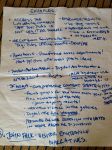
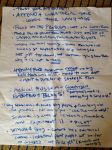
Digital and strategy are two themes that keep emerging in all of my conversations around musetech issues at the moment, and with this morning’s great session on Digital Strategy as context, I proposed an unconference session on those questions. The basic parameters we wanted to explore were how do you act as an internal translator to others in your institution (ie advocacy and communication); how do we collaborate with internal/external stakeholders, and where does digital sit in your institution, and where should it sit?

I’m going to discuss this in more depth later, but for now I thought I’d do a very quick post that captures the documentation of the event.

The discussion on where those at MW2012 sit within their institution, and where they feel they should sit has also prompted a poll asking what department you are in. It would be great if you wanted to answer it over the next day or two before Keir Winesmith posts the results.

Thanks to all those who participated in the session, and to Erica Gangsei for being note-taker.

Museum technologists + organisational digital literacy

Just a quick post whilst sitting in the digital strategy session of MW2012. Is it the responsibility of musetech staff to help push the digital literacy of the broader institution? We often talk about the expectation that other staff in the organisation need to learn how digital works in order that they understand the value of digital, but is it our place to be teaching this? If not us, how will staff with existing low digital proficiency learn about how to negotiate the tech landscape? Do they even need to? If you want a curator to blog or participate on Twitter, digital proficiency is clearly important, but is it up to us to enable their movement into this space?

On curatorial voice and the web

Well, this is going to be an interesting week. Although I have only been in San Diego for Museums and the Web 2012 for about 24 hours now, I have already had more stimulating conversations than in recent months put together. Where time allows, I will shoot to capture a few of these emerging ideas as they come (although time to digest might be hard to come by until the conference ends).

So, first up. I’ve had a couple of parallel discussions with Dafydd James from the National Museum of Wales, and with Ed Rodley (finally, we meet!), about the importance of voice and pitch for different audiences, and it got me thinking of what we are asking of curators (amongst others) when we want them to blog/make public their research or make it open and accessible.

My PhD writing is very different from my blog writing. It is far more dry, academic and formal. The tone and the content are both different, because I am writing for a different audience. Similarly, my early misgivings about the Museums Association UK republishing Can a technologist get ahead in museums? was because the writing had been done for the context of museumgeek, and not for a broader and more general audience. In each case, I am tailoring my pitch to the people I expect to be reading my work.

Frequently curators, and other researchers, are used to writing for a very specific group of other researchers (ie research papers, formal publications). Much as we in the musetech community know each other and speak using particular terminology etc, so do they. This community of passion has a shared understanding of context, and a shared vocabulary, and can talk to the nuance and detail of an issue, because they all have a broad understanding of that issue.

However, when we ask curators to write for the web, we are asking them to write for a completely different audience – and an undefined one at that. The type of language to use, the expectation of existing knowledge – all that is gone. Instead, there is an expectation that the curator can instantly repitch their work, but without a particular focus. Of course, most curators are competent writers, and the change in voice might not prove a problem, but it does likely require additional work and different approach.

Even beyond this, however, by having to simplify their work into a pitch that can be more broadly understood, the nuance of the issue, too, is at risk of being lost, and that changes the nature of the discussion. Maybe some curators could even gently harbour a concern of actually eroding some of their professional standing and reputation by publishing work that is generalist, rather than specialised. (This point is entirely speculative, but it’s something to consider.)

This simplifying of content does already occur in the context of museum exhibition text, but because it is often limited by space, it is also expected to by short and simplistic. The expectation is already pre-set, and this writing exists in the clear context of the exhibition. The open nature of online research is different.

This also threatens the idea we often hear in musetech conversations that we simply need better workloads and content management systems. It’s not so simple as just ‘producing content’ and making that content available, because all content requires repurposing for audience.

When, in my last post, I spoke about breaking musetech conversations out of the bubble, my closing question was How can we as musetech professionals become better translators, and better speak the language that others in the field are using? The question is at least in part about pitch. How can we repitch our conversations so that they are meaningful outside our own bubble? It strikes me that when we argue for curators etc to engage online, we are expecting that they will do the same. But it’s a lot easier to talk to those who already understand your subject than those who don’t, and maybe that adds a layer of complexity.

What do you think? Do you think that this idea of reframing content adds complexity to the question of curatorial voice online? Or, if you are a curator, do you feel there is an expectation to publish different online than you would offline?